***Sorry, this post is really long! But I thought some of my Mom's friends in education might be interested :) Read as you wish!***
As part of our study abroad
program, we all pick a different track to specialize in while we are here. We can pick from public health, social
services, education, environment, or business. Because of my interest in education and my future as a teacher,
I naturally decided to choose the education track. My internship (starting on March 24th) will be in
at an adult education center in a town named Ahero about 20 kilometers outside
of Kisumu. During the classroom
phase in Nairobi, we meet with our track professors about once or twice a
week. My professor is the sweetest
lady I have met! Her name is Jane
and she is a professor at the University of Nairobi in their teacher-training
program. She always comes to class
with a huge smile on her face excited to teach us and learn about our own
experiences in education. My
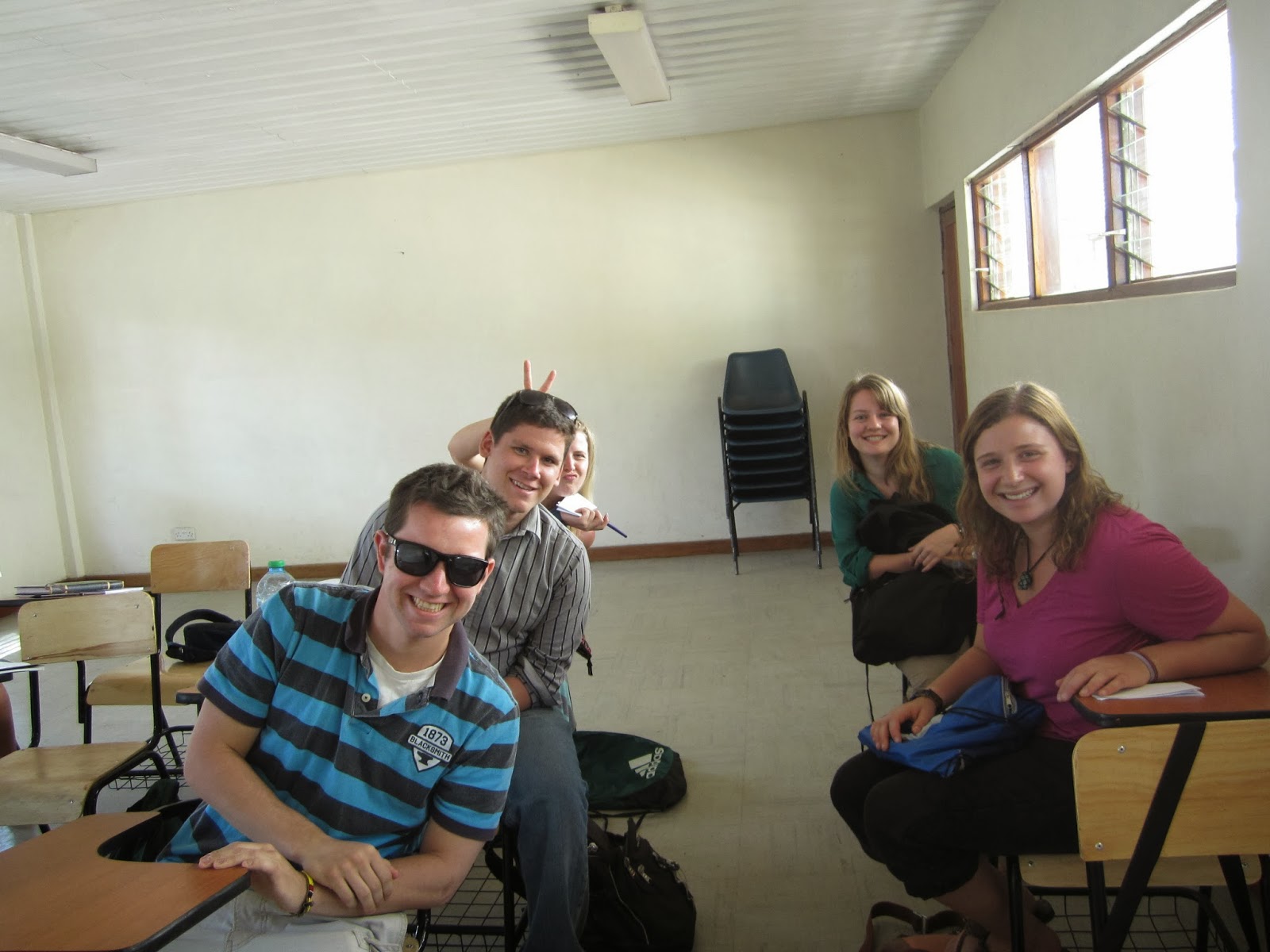
friend Jenni, an Elementary Education major at the University of Minnesota is
my only classmate in the track. Though
the smallest class I have ever had, it has been one of my favorites!
Last
week on Thursday, we had the opportunity to see firsthand the Kenyan education
system that we have been studying all semester. Throughout the day, we visited three different schools to
compare and contrast the disparity found within the education system. First, we visited a girls school
located in Kibera, Africa’s largest slum.
Kibera, located just a five minute walk from my estate, is
geographically one percent of Nairobi, but holds over 25 percent of the
population. Though numbers aren’t
exact, about one million people live in Kibera. Conditions vary throughout Kibera, but most people
live in shacks with tin roofs without running water or functioning toilets. It’s not rare to see babies walking
around without shoes in the narrow streets, which are covered with
garbage. While walking through
Kibera to visit my host uncle one evening, I saw kids playing with a soccer
ball that looked like it was made out of plastic grocery bags. I then learned the children blow up
condoms and wrap them with plastic grocery bags until it’s big enough to kick
around. There are many saddening
stories of people in Kibera I won’t burden you with, but in short, the source
of most problems in Kibera is poverty.
Most people are honest citizens that traveled from rural areas in Kenya
to Nairobi in hopes of making a better life for their families. As the American Dream today seems to
elude many immigrants and Americans, the “Nairobi Dream” eludes thousands of
Kenyans.
Kibera Girls Soccer
Academy
 |
| Pictures courtesy of KGSA website. |
Walking
through homes of dirt walls and tin roofs, we reached Kibera Girls Soccer
Academy (KGSA). KGSA is a
secondary school (high school) run by a non-profit in America. Right now, the school has about 130
girls and just recently added 30 boys.
All of the children at KGSA are from Kibera and in great need of
assistance. In Kenya, secondary
education is not free so many students from Kibera or other needy families
cannot afford to move on from primary school. The school admits their students on a first come first serve
basis and they said each year they send many girls away crying. Because the school is sponsored and is
completely free for students, many girls in Kibera feel like KGSA is their last
chance to achieve a better future and different destiny.
The headmistress was sharing with
us that many students are orphans and live with abusive relatives in Kibera
that require them to do hours of housework every day after school. Other students don’t have access to
meals outside of lunch, which is provided every day at school. Because all of the teachers were
volunteers initially when the school was started in 2006, most of the teachers
are not trained professionally though some are attending school right now. All teachers also come
from Kibera. The school had two
small buildings made out of cement and tin with about eight classrooms and one
lunchroom. The classrooms were
simple rooms with desks and a blackboard.
I saw an old desktop computer in the headmistresses office, but
otherwise the students worked without technology from workbooks.
When we walked into the room of freshman girls, their eyes
lit up as we introduced ourselves.
They seemed thankful for a short break from their mathematics :) After a few minutes of
introductions and sweet remarks from the girls, I didn’t want to leave. I wanted to stay and get to know them
and all of their stories. From all
of their life experiences, I’m sure they are wise beyond their years. Overall, the Kenyan government has
failed to serve the people of Kibera especially in terms of secondary
education. And even though primary
school is free and supposed to be equally accessible to all, there are not
enough primary schools in Kibera.
Some primary schools and all secondary schools are sponsored by
non-profits or NGOs. Even if there
were more government sponsored schools in Kibera, most students would not be
able to attend because of additional fees and uniform fees.
St. Christopher’s
Immediately after visiting KGSA, we
visited a private school on the outskirts of Nairobi. When we drove up to the huge gates manned by several
security officers, the contrast between KGSA and St. Christopher’s was
overwhelming. This school looked
like a resort. The architecture
was beautiful and elaborate with skywalks crossing back and forth between
different wings. Beyond the
classrooms was a recreational swimming pool fit for a fancy hotel with two
lanes for swimming laps. On the
other side of the building sat a beautiful jungle gym for the students to play
on. The classrooms themselves
looked a lot like America classrooms:
a lot of colors, projectors, desks, lots of space, posters, children’s
artwork, etc. After seeing the
whole primary school facility, I asked how many students attended St.
Christopher’s. Expecting the
teacher to say 500 or 600, I was appalled when I learned the whole facility
held 200 students. Most parents in
Kenya will send their students to private schools if they can afford it because
of the lack of resources and funding in government funded schools. Many great teachers also flee
government-funded schools because they will be paid much better at private schools.
This particularly private school adheres to the British
system. Consequently, the students
are immune from the strenuous Kenyan exam system (There are national exams
after 8th grade to move on to high school and an exam at the end of
high school to enter college).
Most students come from lower- upper class to upper class families and
will most likely go to college in the US or the UK. Fees per term (there are three terms per year) are about
$1,500. $1,500 doesn’t sound like
too much in America, but here in Kenya it is probably equivalent to $4,000 in
the US. Though it was difficult to
see the necessity and justice in the extravagance in the school’s facilities, I
agree with the ideals and overall philosophy of the school. The school believes in developing talents
outside of academics and championing each student for their individuality. In the Kenyan system, all of the focus
in placed on succeeding on the national exams. Most schools even list their students in order from 1 to
last in public. I can only imagine
how demoralizing that can be for students who have other talents outside of
academics or taking tests.
Though we have standardized tests
in the US, in most states they don’t have a big impact on students’
futures. In Kenyan, if you don’t
score well at the end of 8th grade, you could be shut out of the
education system all together. The
highest scoring students go to the best schools as the lowest scoring students
that still pass go to very poor community schools that are not well
funded. From high school to
university, the situation is the same.
The students who score well get to automatically go to the best colleges
and are sponsored by the government while other lower performing students must
go to lesser colleges, technical schools, or must simply enter the job
force.
Ngong Village School
After
visiting St. Christopher’s we went to visit a village school in Ngong Hills
(about an hour outside of Nairobi).
It was actually the primary school one of our MSID staff member, Simon,
attended when he was little! The
school is a government sponsored school and serves a mostly Masaai
community. The Masaai are
pastoralists in Kenya and are known for training young men to fight lions,
polygamy, and having a diet of meat, milk, and animal blood.
The school reminded me a lot of the
Kibera Girls Soccer Academy except there were about 400 students. The school was originally started by
the community in the 1980s when class was held under one of the big trees in the
front of the school. Over the past
decades the school has grown to about three small, modest buildings again with
simple classrooms without technology.
The school has 9 teachers all paid meager salaries by the government. With only nine teachers, class sizes
are about 50 to 60 students. Though
most students in this school eat well at home due to their families’ livestock,
they have the challenges of rural living.
About half the students ages 5-13 walk six miles one way to school every
day. These students leave their
home at 4:00am or 4:30am to arrive at school at 7:00am.
After talking to the principal for
some time, Jenni and I walked outside to see some classrooms when we ended up
in a group of over 50 little kindergarten students. At first they looked at us they like we were aliens. After we outstretched our hands a
couple students came forward and then they all started stroking our arms. We then broke away to see a special
classroom the school at prepared for the government laptop initiative. The government has promised every child
in Kenya a laptop. At
first, the idea of the laptop initiative seemed absurd to me as so many schools
in Kenya don’t even have basic necessities and facilities, but after seeing the
excited teachers and administrators I feel as if implemented effectively it
could ultimately benefit the children.
I just hope the government will follow through and it won’t be another
broken political campaign promise.
After we came out of the classroom
we didn’t see the children and thought they had all decided to go home. We soon realized we were wrong, as they
had moved to surround the bus we had driven (so cute!)! Then the stroking of the arms started
all over again. One little girl
even started feeling the hair on my arms with curiosity. (haha) Jenni later made fun of me as she heard
me say, “Yes, my arms are furry!” The same little girl then went over to Jenni to see if she
was the same! And a little boy even
rubbed Jenni’s leg to investigate.
Once we finally made it back into the van, our professor Jane told us it
was probably the first time those children had ever seen a mzunugu (white
person) and it will be a memory they will never forget. She said they will be talking about it
for days to their parents and friends.
At first, this seemed sweet, but then Jenni and I realized the weight of
the social implications of what Jane had said. The children seemed to put us on a pedestal like famous
celebrities because of our skin.
I’ll go more in-depth about my experience as a minority while still
having privilege in a later blog post!
Overall, we had an amazing and
eye-opening day learning from different schools across Kenya.


 The
last couple weeks of class the MSID staff decided to give us Fridays off to
write the four or five papers that are due at the end of the semester. Though we always intend to do our
homework, we always seem to be traveling somewhere :) I figure I might as well take
advantage of the opportunity to see as much as I can while I’m here because I
don’t know when I’ll be able to come back! And I’m sure my papers will get done eventually! Anyway,
since we didn’t have class Friday some of use flew out of Nairobi Thursday
night. After only about an hour we
landed in Mombasa. Immediately when we stepped off the plane we could feel the
change in temperature. We heard it
was hot along the coast, but we had no idea it was going to be so humid! Even at midnight, we couldn't stand to sit in our van without the windows wide open. It reminded me of July in Washington,
D.C. After about an hour and a
half, we finally arrived at our hostel around 1:00 AM. Our hostel, South Coast Backpackers,
was more like a resort! It has a
big pool, a bar, a kitchen, nice bathrooms, a TV room, and lots of space
outside to hang out.
The
last couple weeks of class the MSID staff decided to give us Fridays off to
write the four or five papers that are due at the end of the semester. Though we always intend to do our
homework, we always seem to be traveling somewhere :) I figure I might as well take
advantage of the opportunity to see as much as I can while I’m here because I
don’t know when I’ll be able to come back! And I’m sure my papers will get done eventually! Anyway,
since we didn’t have class Friday some of use flew out of Nairobi Thursday
night. After only about an hour we
landed in Mombasa. Immediately when we stepped off the plane we could feel the
change in temperature. We heard it
was hot along the coast, but we had no idea it was going to be so humid! Even at midnight, we couldn't stand to sit in our van without the windows wide open. It reminded me of July in Washington,
D.C. After about an hour and a
half, we finally arrived at our hostel around 1:00 AM. Our hostel, South Coast Backpackers,
was more like a resort! It has a
big pool, a bar, a kitchen, nice bathrooms, a TV room, and lots of space
outside to hang out.  On
Friday morning we woke up and went straight to the beach, which was about a
five minute walk from our hostel.
The beach was the most beautiful beach I had ever seen! The sand was
pure white and packed down so it wasn’t hard to walk through at all! And unlike beaches on the east coast in
the US, I didn’t step on one sharp rock or seashell. The water was also so blue and warm! I actually wished the water was a bit
cooler as it was so hot and humid outside! We pretty much soaked up the sun all day as different
Kenyans came up to talk to us.
Often times they wanted us to buy things, but some times they were just
welcoming us. The people in
Mombasa were all so nice and accommodating. They wouldn’t stop saying “Karibu! (Welcome!)” and “Hakuna
Matata (No worries/No problem)!” (Hakuna Matata actually means “No chaos” in
Swahili and was made a popular saying from The Lion King despite being
incorrect. Most Kenyans will say “Hakuna
Shida” instead and will just say “Hakuna Matata” to tourists.)
On
Friday morning we woke up and went straight to the beach, which was about a
five minute walk from our hostel.
The beach was the most beautiful beach I had ever seen! The sand was
pure white and packed down so it wasn’t hard to walk through at all! And unlike beaches on the east coast in
the US, I didn’t step on one sharp rock or seashell. The water was also so blue and warm! I actually wished the water was a bit
cooler as it was so hot and humid outside! We pretty much soaked up the sun all day as different
Kenyans came up to talk to us.
Often times they wanted us to buy things, but some times they were just
welcoming us. The people in
Mombasa were all so nice and accommodating. They wouldn’t stop saying “Karibu! (Welcome!)” and “Hakuna
Matata (No worries/No problem)!” (Hakuna Matata actually means “No chaos” in
Swahili and was made a popular saying from The Lion King despite being
incorrect. Most Kenyans will say “Hakuna
Shida” instead and will just say “Hakuna Matata” to tourists.)  On Friday afternoon, we decided to ride camels! It was such an awesome experience
riding such a majestic animal along the gorgeous beach. I was surprised how calm and well
behaved they were. They pretty
much listened to anything their owners told them. I thought it was funny how the camels sit on the beach…they
fold their legs under them. I’m
not sure how they bend that way!! The owners had the camels lay down so we
could get on and off more easily and it was crazy how much height they lose
when they collapse their legs! I
definitely thought I was going to fall off!
On Friday afternoon, we decided to ride camels! It was such an awesome experience
riding such a majestic animal along the gorgeous beach. I was surprised how calm and well
behaved they were. They pretty
much listened to anything their owners told them. I thought it was funny how the camels sit on the beach…they
fold their legs under them. I’m
not sure how they bend that way!! The owners had the camels lay down so we
could get on and off more easily and it was crazy how much height they lose
when they collapse their legs! I
definitely thought I was going to fall off! 


 Two weeks ago, I took a break from traveling and spent the
weekend in Nairobi. On Saturday, I
decided to take my brothers to the Giraffe Center just outside of Nairobi. In the 120 acres of protected land, the
center breeds endangered Rothschild Giraffes. After about two years, all of the giraffes are introduced
back into the wild in selected protected Kenyan lands. We all had a lot of fun petting and
especially feeding the giraffes.
My little brother Kyle (6 years old) was scared of the big giraffes and
decided to make sure the baby giraffe was completely full by the time we left
(he didn’t stop running back to get more food for a full twenty minutes)! He also was scared of touching the
tongue so he would throw the food at the baby’s tongue expecting the giraffe to
be able to quickly maneuver his tongue to catch the small piece of food. (haha)
Leanew (11 years old) had fun feeding the giraffes too, but I think he had even more
fun taking pictures and videos of all of the people and giraffes! He’s the one who captured my kiss with
the giraffe! The poor giraffe….I
had to kiss him about six times before Leanew got it on camera!
Two weeks ago, I took a break from traveling and spent the
weekend in Nairobi. On Saturday, I
decided to take my brothers to the Giraffe Center just outside of Nairobi. In the 120 acres of protected land, the
center breeds endangered Rothschild Giraffes. After about two years, all of the giraffes are introduced
back into the wild in selected protected Kenyan lands. We all had a lot of fun petting and
especially feeding the giraffes.
My little brother Kyle (6 years old) was scared of the big giraffes and
decided to make sure the baby giraffe was completely full by the time we left
(he didn’t stop running back to get more food for a full twenty minutes)! He also was scared of touching the
tongue so he would throw the food at the baby’s tongue expecting the giraffe to
be able to quickly maneuver his tongue to catch the small piece of food. (haha)
Leanew (11 years old) had fun feeding the giraffes too, but I think he had even more
fun taking pictures and videos of all of the people and giraffes! He’s the one who captured my kiss with
the giraffe! The poor giraffe….I
had to kiss him about six times before Leanew got it on camera!  At least the giraffe got plenty of food
out of the deal (I had to place a piece of food in my lips and the giraffes
grabs it with his tongue). Besides
a little slobber and a slightly scratchy tongue, I’d say the giraffe was a
decent kisser! : P After we read
about the giraffes and fed the giraffes one more time, we enjoyed some KFC (KFC
is the only American fast food chain in Kenya. There are rumors of a McDonalds in Nairobi coming soon, but
I’m not sure if that’s true.)
Because chicken is pretty expensive here in Kenya, the boys usually only
have chicken for special occasions so they were excited to be eating some fried
chicken! Overall, it was a great
day with my two little brothers!
(My parents decided I shouldn’t bring TJ (two years old) as he is only two
and they weren’t sure how he’d react to giraffes.)
At least the giraffe got plenty of food
out of the deal (I had to place a piece of food in my lips and the giraffes
grabs it with his tongue). Besides
a little slobber and a slightly scratchy tongue, I’d say the giraffe was a
decent kisser! : P After we read
about the giraffes and fed the giraffes one more time, we enjoyed some KFC (KFC
is the only American fast food chain in Kenya. There are rumors of a McDonalds in Nairobi coming soon, but
I’m not sure if that’s true.)
Because chicken is pretty expensive here in Kenya, the boys usually only
have chicken for special occasions so they were excited to be eating some fried
chicken! Overall, it was a great
day with my two little brothers!
(My parents decided I shouldn’t bring TJ (two years old) as he is only two
and they weren’t sure how he’d react to giraffes.)


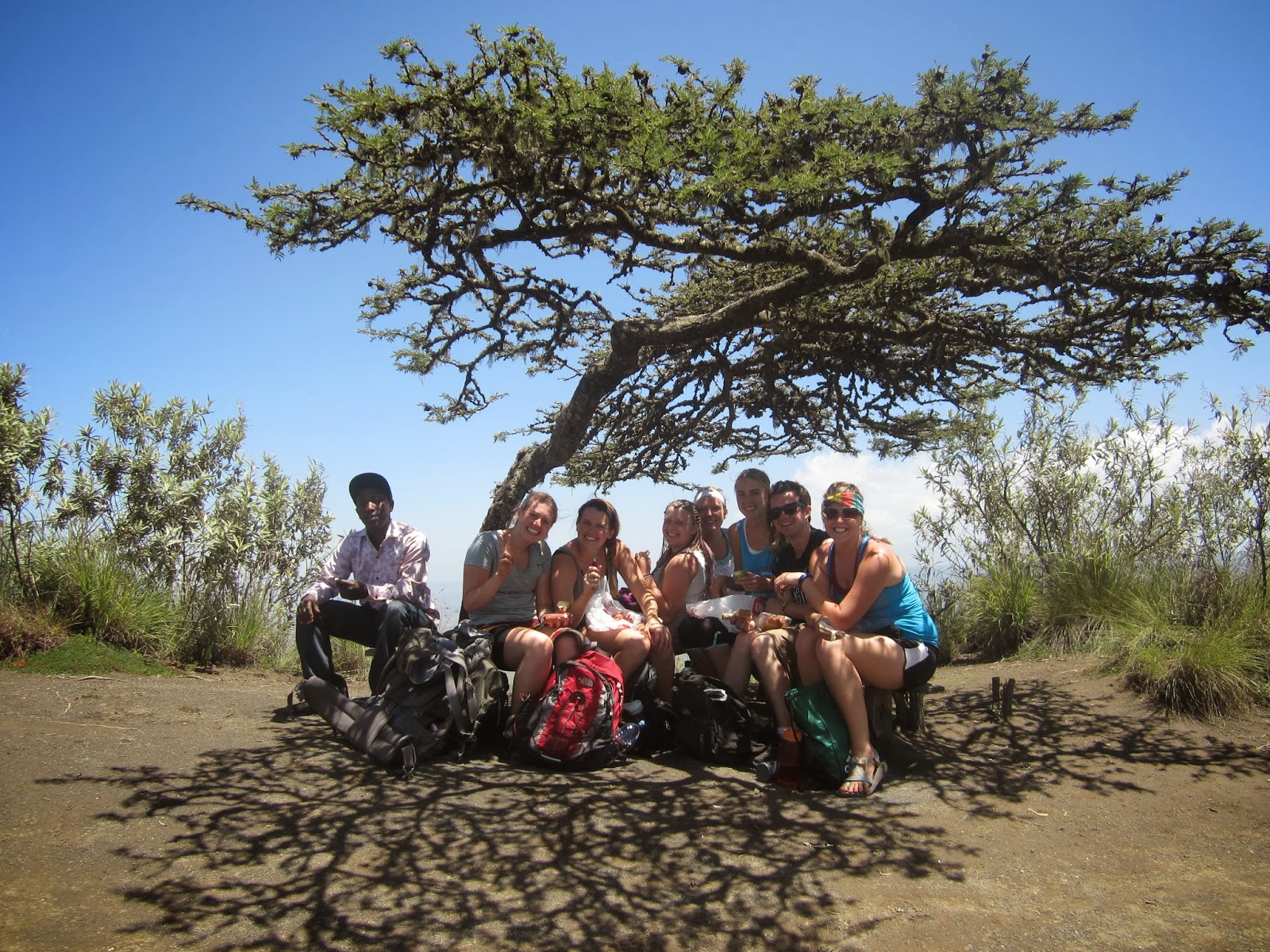 After reaching the top, we decided to eat our packed lunches
under an acacia tree (the trees most people think of in the Lion King or an
African safari). Following lunch we were looking forward to a nice stroll
around the rim of the crater.
Though we knew it’d take three or fours hours to make it around the
whole crater, we didn’t think there would be much intense hiking. We couldn’t have been more wrong! We
have learned that Kenyans and Americans have very definitions of the word
“hike.” To us a hike is a trail
with some moderate inclines. Here
a hike is a trail path with steep inclines and some moderate rock climbing. For an example, our two Kenyan bus
drivers came with us on the hike and I don’t think they sweat or breathed hard
for one moment of the hike. They
also only shared a half a bottle of water the whole day! We all definitely felt incompetent in
comparison as we were dripping in sweat and had about three water bottles each!
After reaching the top, we decided to eat our packed lunches
under an acacia tree (the trees most people think of in the Lion King or an
African safari). Following lunch we were looking forward to a nice stroll
around the rim of the crater.
Though we knew it’d take three or fours hours to make it around the
whole crater, we didn’t think there would be much intense hiking. We couldn’t have been more wrong! We
have learned that Kenyans and Americans have very definitions of the word
“hike.” To us a hike is a trail
with some moderate inclines. Here
a hike is a trail path with steep inclines and some moderate rock climbing. For an example, our two Kenyan bus
drivers came with us on the hike and I don’t think they sweat or breathed hard
for one moment of the hike. They
also only shared a half a bottle of water the whole day! We all definitely felt incompetent in
comparison as we were dripping in sweat and had about three water bottles each!


 The moment I started
riding my bike in the beautiful park, I couldn’t help but smile from ear to
ear! The weather was absolutely
perfect, sunny with a little breeze and it was a lot of fun being back on a
bike again! Along our 8 km ride
through the park, I saw zebras, giraffes, water buffalo, and impalas. The zebras were so close I felt like I
could reach out and touch them! At
the end of the 8 km I was so disappointed because I could’ve ridden that bike
all day! At the end of the trail, we
ate lunch under a picnic area at the park. About two minutes into our lunch, we noticed there were
baboons hanging around the picnic tables.
They looked and acted a lot like the ones at Lake Nakuru. All of the sudden, my friend Matt was
pointing and said, “Jenna! Look out, behind you!” Within a split second, before any of us could react, a
baboon jumped onto the picnic table and stole my friend Maggie’s mango right
off of the table! Oh my goodness!
The moment I started
riding my bike in the beautiful park, I couldn’t help but smile from ear to
ear! The weather was absolutely
perfect, sunny with a little breeze and it was a lot of fun being back on a
bike again! Along our 8 km ride
through the park, I saw zebras, giraffes, water buffalo, and impalas. The zebras were so close I felt like I
could reach out and touch them! At
the end of the 8 km I was so disappointed because I could’ve ridden that bike
all day! At the end of the trail, we
ate lunch under a picnic area at the park. About two minutes into our lunch, we noticed there were
baboons hanging around the picnic tables.
They looked and acted a lot like the ones at Lake Nakuru. All of the sudden, my friend Matt was
pointing and said, “Jenna! Look out, behind you!” Within a split second, before any of us could react, a
baboon jumped onto the picnic table and stole my friend Maggie’s mango right
off of the table! Oh my goodness!